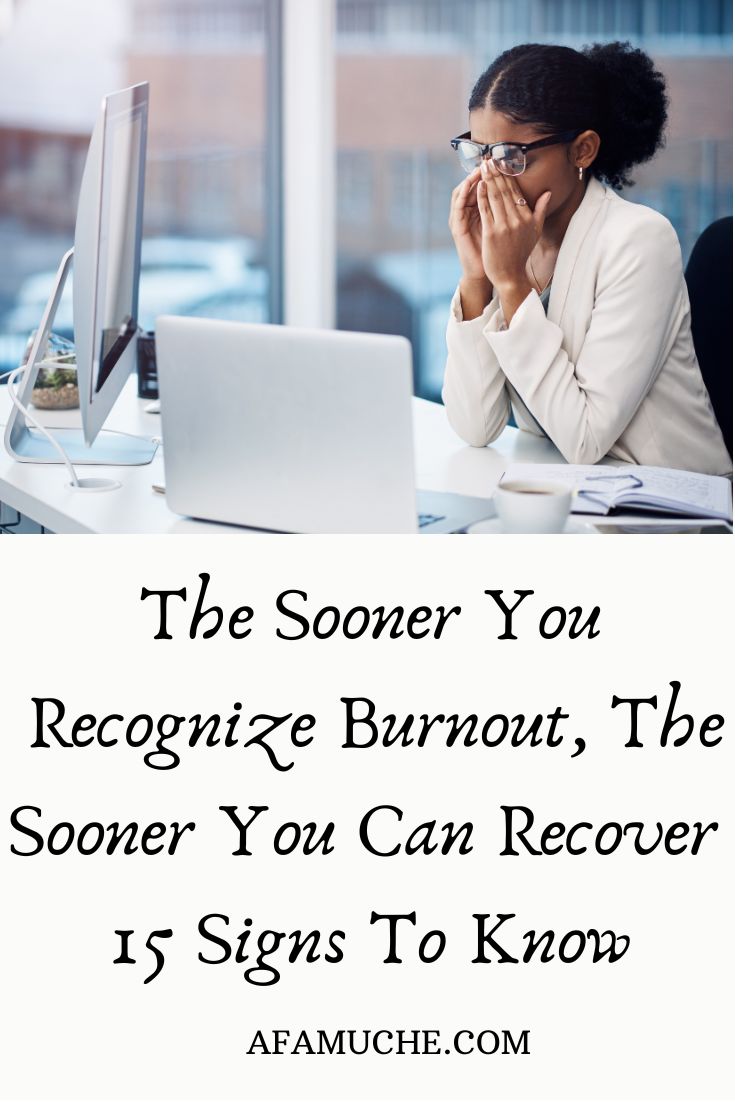

Burnout is common in the constant juggling of work, family, and personal goals. In the rush to keep up, we often forget to rest and take care of ourselves. Now, that you’re here, ‘BREATHE!
You may be a bit more tired every day or lose interest in things that you used to enjoy. Gradually, these feelings can build and begin to impact relationships, work, and general well-being. Luckily, burnout is both preventable and treatable in its early stages.
By identifying the signs of burnout early, you can take steps toward recovery before it seriously affects your health. This article will explore 15 common signs of burnout and what they may mean for your life.

1. Chronic Fatigue
Fatigue is protection from a long day, but chronic fatigue is quite another thing altogether. It is deep and gnawing tiredness that just does not want to go away, even after a great deal of sleep and rest. You may wake up just as exhausted as when you went to bed.
Burnout is more than a feeling of tiredness; it’s an overwhelming state of the body, mind, and emotions from long-term stress. It doesn’t just pop out of the blue; instead, it builds up over time, usually without us noticing.
Each time I’m feeling overwhelmed with work or stress from the day, to avoid chronic fatigue, I normally take a walk around my street for at least 15 minutes. Chronic fatigue has a way of making you feel totally overwhelmed and not ready to do anything.
Chronic fatigue makes every simple task seem like doing something stressful. It is normally characterized by the exhaustion that arises from constant overexertion of the body and mind without giving them time for rest.
Set boundaries between work time and personal time. Take regular breaks, go to bed on time, and focus on getting enough sleep. Even small changes, like taking short walks or practicing mindfulness, can help recharge your energy levels.
2. Insomnia

Burnout not only makes you tired but also interferes with your sleep ability. The inability to fall or stay asleep, also known as insomnia, is a common problem when experiencing burnout.
You may lie awake worrying about what you didn’t get done during the day or just feel restless for no apparent reason.
My friend complained about how difficult it is for her to sleep. Someone who works so much during the day, but before you see her sleeping, she would have taken pills or done something that would forcefully cause her to sleep.
In time, sleep deprivation will aggravate other signs of burnout: irritability and lack of concentration. It becomes a vicious cycle: stress begets poor sleep; poor sleep begets stress.
What to do to prevent insomnia that can result in burnout is; Do some quiet night routine: read or meditate before going to bed. At least an hour before sleep, keep the screens off- the blue light interferes with your body’s natural sleep signals.
3. Loss Of Motivation
As burnout hits, the drive to get goals or tasks accomplished mostly disappears: you may procrastinate or be indifferent about things you care deeply about. One of the major signs of burnout that affects the proper functioning of a human is loss of motivation.
Motivation is more like a drive to do what you need to do, but when you experience burnout, you find it hard to do anything and the zeal to continue normally.
When you begin to see little signs of burnout while trying to accomplish a goal, try strategizing and taking a short break that can refresh your memory.
It may be a project once thrilling for you, but now feels overwhelming. Or, beyond one particular point, one may not find enough grounds to keep going. From professional to personal, all the aspects of life seem to stagnate.
To avoid burnout from prevailing, you must rethink your goals and change them if necessary. Also, divide big tasks into smaller, more manageable pieces, and congratulate yourself for small accomplishments.
4. Increased Irritability
Even slight inconveniences may start feeling unbearable with burnout. Increased irritability can well be experienced since sustained stress lowers one’s patience and emotional resilience.
Once you start seeing yourself feeling too irritated at any little things, calm down to sit and relax because irritability is a major sign of burnout.
Have you wondered why some workers seem to be more harsh during the day than in the morning? It’s a result of intense work that paves the way for burnout to occur.
You might find yourself snapping at co-workers or loved ones over things that wouldn’t normally bother you. It can strain relationships and create unnecessary conflict, adding to your stress.
Irritability could result in under performance of a task and gives you no room to understand yourself.
What you have to do to avoid irritability is by practicing stress-reducing activities, such as deep breathing or journaling. Talking openly with others about your feelings can also ease tension.
5. Reduced Productivity

Along with burnout comes a lack of productivity. Things that used to take very little time and effort to complete may now take twice as long, if not longer, and meeting deadlines may be hard or impossible.
This is not a reflection of your abilities; this is a signal that your mind and body are overwhelmed. Over time, lowered productivity may set in feelings of guilt or frustration, adding to the problem.
I thought I could function better when I spent nearly 15 hours working, but the reverse was the case. I once tried staying close to 13 hours to achieve a particular task.
The task was burdensome, and I planned to complete the rest the next day. In the 12th hour, I realized I couldn’t even open my eyes properly to complete what I was doing and that I had to go and rest.
Guess what? The next day, I could not do any task allocated for the day because I experienced suppressing burnout.
At the end of the day, my day was unproductive. Trying to achieve so much can lead to burnout, which will reduce your productivity level and make you less focused on what your goal should be.
To avoid being burnt out, pay attention to one task at a time, and don’t be afraid to ask for help where you need it. Delegating responsibilities or changing priorities can help spread the load.
6. Lack Of Focus
Burned out, you just can’t seem to focus: you drift off in meetings or maybe space out on key facts. That foggy feeling is one of the clearest signs of burnout.
In a severe state of burnout, one of the least things you can help doing is feeling completely empty. The mind to focus will be completely left out because burnout leaves you not thinking of anything positive in a definite direction.
More often than not, such lack of focus results in mistakes or missed opportunities, which may further dent your confidence and increase your stress levels.
Take short breaks throughout the day so your brain can reboot. Being able to be more mindful or using a list, can help someone organize his life.
7. Physical Symptoms

Burnout does not affect only your brain; it might also affect your body. The common complaints are headache, stomach problems, or muscular ache.
Some also find disturbed appetite or become ill very frequently because their immunity power becomes weak due to burnout. My friends easily realise when I’m experiencing burnout because I’d always complain of incessant headaches after work.
There were days when I could be overly drained at work, and headaches became just normal to me until it got to a severe state where the signs of burnout were getting too obvious, and I was asked to take a break from work a little.
These symptoms are the way of your body indicating that something is going wrong. Overlooking such signs may result in a worse condition shortly. Listen to the messages of your body.
Regular physical activity, well-nourished food, and rest can reduce or possibly avoid physical symptoms.
8. Emotional Exhaustion
Sometimes, we feel very tired inside-not the body, but very deep inside. That is emotional exhaustion. It occurs when a person has been worried or stressed out or working too hard without a break for quite some time.
Just imagine you have been carrying a heavy backpack all day long-you feel like you can’t take another step.
That’s how your emotions feel when you’re burned out. You may feel sad, easily upset, or you simply don’t have the energy to care about things that you usually like.
Rest is very important, as talking to somebody you trust, and finding things to do that make you feel better, play or relax.
Burnout is also described by an emotional sense of depletion. You feel depleted and have nothing left over to give to yourself or others. Minor demands or requests are perceived as distress.
This kind of emotional exhaustion is one of the great signs of burnout, and it makes it hard for one to connect with one’s loved ones or indulge in activities once enjoyed with much passion.
To take care of it, spend time in self-care: be that in nature, talking with a trusted friend, or in therapy, and find ways to recharge emotionally.
9. Detachment From Work Or Activities
As burnout takes hold, one may start to feel detached from things that were once cared about, be it your job, hobbies, or even relationships. You might go through the motions, but you won’t feel any real engagement.
Generally, detachment is the avoidance of overwhelming feelings. Unfortunately, it leads to isolation and dissatisfaction. Do things that make you happy even if it is only for small bits each day. Times of happiness are developed this way.
Doing things that make me feel happy is one of the methods I deployed to ensure I never experience signs of burnout from creeping into me.
I used to be that one person who preferred to handle all the tasks ahead of me at once, and wouldn’t mind if there was anything like burnout at all.
I found it hard to pull together and prioritise isolation. It all ended when a therapist met me and advised me to engage in activities that gave me joy.
Burnout makes you feel detached and lonely, but doing things that uplift your mood helps you overcome it.
10. Increased Absenteeism
Burnout makes people avoid their responsibilities, whether it be work, attending social functions, or other personal commitments. You may notice yourself calling in sick now and then or cancelling plans at the last minute.
Increased absenteeism as a sign of burnout starts from missing work here and there, and not being willing to go anywhere at a time. For someone experiencing burnout, showing up at work becomes a hard task instead of a routine.
This avoidance is indicative of not being able to cope with daily demands. While breaks are necessary, constant absenteeism will have long-term effects. If you feel overwhelmed, speak with your employer or family members about your situation.
They might be able to extend support or flexibility to get you back on your feet.
11. Putting Things Off Until The Last Minute
Procrastination is a common burnout symptom. Tasks that normally are manageable may now just feel so overwhelming that you do not do them. This can snowball responsibilities and, further your stress, and aggravate the burnout.
Break tasks into smaller, more manageable steps. Give a realistic deadline to complete it. Allow and reward yourself for the accomplishment of a small part of your work for motivation.
12. Loss Of Creativity
Being a creative person can make this fatigue even harder to deal with. Ideas may no longer be inspired, and solving problems may take much more time.
It not only influences your work but also other areas in your life; the things which used to make life exciting appear dull and monotonous.
Go on a break from the challenging tasks and take your time to remobilise. Sometimes, new hobbies or environments can get the juices of creativity going once more.
Loss of creativity is one of the major signs of burnout, and it can make an individual perform poorly and become less creative.
13. More Self-Doubt

Burnout can make you doubt your capabilities and your worth. You may feel that you are not good enough or that you are constantly failing even when you are doing your best.
This can enter into a vicious circle of negative thoughts, further worsening the chances of recovery. Remind yourself of your achievements and strengths. Surround yourself with people who can help boost your confidence.
14. Physical Tension
Burnout often manifests as physical tension, such as tight muscles, clenched jaws, or stiff shoulders. This tension is your body’s way of holding onto stress. With time, this may lead to chronic pain or discomfort, which in turn impairs the ability to relax.
Practice relaxation techniques such as yoga, stretching, or deep breathing. Regular massages or physical therapy can also help you release tension.
15. Feeling Hopeless Or Helpless
A feeling of hopelessness or helplessness is one of the most serious signs of burnout. You may feel that nothing will ever improve or that your efforts do not matter.
This contributes to the downward spiral whereby no good thing can be enjoyable anymore or provide motivation. If feelings of hopelessness start, see a professional immediately.
Being able to discuss the problem with a trained therapist or counsellor will assist and support one in resolving such feelings.
What Are The 5 Stages Of Burnout?
Burnout is a condition wherein a person undergoes continuous fatigue and stress. It is just like running a race without stopping and reaching a stage where your body and mind cannot keep pace with it anymore.
To explain this better, let’s describe the five stages of burnout:
1. The Excitement Stage

At first, everything was exciting. You could have a new job, or you have started working on a new project, or just began exploring something really interesting. You are full of energy and want to give your best. Sometimes, though, you may be pushing yourself without even realizing it.
2. The Overload Stage
With time, you might start to feel overwhelmed. There’s so much to do, and perfection for each must be sought. You might skip your breaks or even sacrifice a couple of hours of sleep in order to get work done, but rather than a sense of accomplishment, it gets you drained.
3. The Frustration Stage

This is the stage where it gets tough. You feel that no matter how hard you work, you simply cannot pull it off. You become irritable or frustrated or perhaps sad. The fun seems to wear off.
4. The Shutdown Stage
At this stage, you are very exhausted. You don’t even care about work, school, or any activities that you once loved. You may feel like giving up because it is all so overwhelming. Your energy is totally sapped.
5. The Rock-Bottom Stage
This is the final stage of burnout. It’s like hitting a wall. You’re so worn out, both physically and mentally, that even small tasks seem impossible. You may be sick or deeply saddened, and it becomes clear that, to recover, you need support.
If you notice these stages going on with yourself, it is very important to step aside, speak with someone, and take care of yourself. Remember, asking for help is one of the most courageous moves.
How Do You Tell If You’re Burnt Out?
Of course, sometimes, being tired isn’t about resting. If you can’t focus, are always tense, or minor tasks seem insurmountable, you might be experiencing burnout. It occurs when a person has been working or worrying too much without having time to rest.
You might get irritated, feel so depressed, or have no enthusiasm for anything that previously excites you. Your body may feel heavy, and sleep can get weird. If that’s you, then it is time to slow down.
Talk to someone you trust, take breaks, and do things that make you happy. Taking care of yourself is important.
Signs Of Burnout At Work
- Feeling tired all the time.
- Not caring about work.
- Making more mistakes.
- Feeling angry or sick.
- Getting sick often.
If you notice one of these signs, It’s better you talk to your colleague or your boss and take breaks to feel better.
Signs of burnout at home
- Always feeling tired.
- Getting annoyed easily.
- No time for yourself.
- Forgetting things.
- Feeling sad or empty.
If any of these seem to happen, ask for help, take a break and try to do something you enjoy.
What Are The Early Signs Of Burnout?
Burnout does not happen overnight. It’s a process and may be gradual. First, you may overtired-feeling as if you never get enough rest. Work and chores can take longer, and you don’t have much energy to do anything that you usually enjoy. You may also become irritable or upset more easily over things that wouldn’t usually rile you.
Sometimes, it is hard to focus, and you may forget things. You may also feel like nothing you do is good enough. Even hanging out with friends or family feels exhausting instead of fun.
These are early warning signs that you need to rest and take care of yourself. Talk to someone you trust, take breaks, and find time for what makes you happy.
Signs Of Burnout In Life
Burnout feels as if the gas tank never refills. You are so tired even after getting rested; things you used to think were fun don’t seem that much fun anymore, you may be having problems focusing, and minor jobs would seem to be daunting. One can always feel angry or sad or feel that nothing important counts.
The body does signal this through headaches and stomach aches. Burnout results from overstretching without time to rest. Sometimes, it’s like running and never stopping to take in water. Take note that it’s okay to pause, ask for help, take time out, and chill.
Conclusion
Burnout is serious, but recognition of signs of burnout is the first step toward recovery. Paying attention to your body, emotions, and behaviour is how you will take action before burnout takes over your life.
If you find any of these 15 signs of burnout in yourself, please do not let them be. Go for self-care, seek support, and allow yourself to take a step back whenever necessary.
It’s one thing to spend your time trying to be productive, but in the end, if your mental health is in jeopardy, it’s not worth it. It’s worth the effort to keep yourself healthy and happy.
Save this for later!