

I get it; social media, family, school, work tasks, etc. everything’s pulling you in different directions! It’s overwhelming. Regardless of your personal commitments, goals, or deadlines, prioritizing tasks properly can make a significant difference in maintaining balance and gaining success.
How to prioritize tasks begins with having a clear strategy that aligns with your goals. This involves breaking down your responsibilities, ranking their relevance, and deciding on what requires your immediate attention. By focusing on what’s essential, you can improve your overall efficiency.
In this article, I’ll introduce ten simple but practical ways to learn how to prioritize tasks. When used properly, these hacks will help you conquer procrastination, streamline your workload, and stay on track no matter how chaotic things get. Keep reading and find out more for yourself!

1. Make A To-Do List
One of the simplest ways you can learn how to prioritize tasks is to make a to-do list. A to-do list is a simple list of everything you must do daily. With a clear list, you can organize your thoughts and ensure you don’t forget crucial responsibilities.
You can also learn how to structure your day before you begin, giving you some form of control and making enormous tasks less overwhelming and much easier to manage.
I found myself in an exhausting position. I had so much schoolwork and my online job to handle, and I was caught in the trap of not knowing what to focus on. It all felt very chaotic, overwhelming, and, worse of all, confusing.
Writing down everything I needed to do was the first step that helped me gain peace of mind and clarity on what needed my attention first. Discovering how helpful it is has made me a daily user and has saved me from dealing with unnecessary stress.
You can put this to practice by first writing down all the tasks you need to complete. I recommend doing this on the previous day. You don’t need to worry about the order now; just focus on getting everything from your head to the paper in front of you.
Next, review your list and categorize each item based on its importance and urgency. Then, assign deadlines to each task to help you stay focused.
For each task you complete, cross it off your list. As small as this action seems, it is incredibly satisfying and motivates you to keep going. By consistently using this method, you’ll gradually notice how efficient and productive you’ve become.
2. Break Tasks Into Smaller Steps
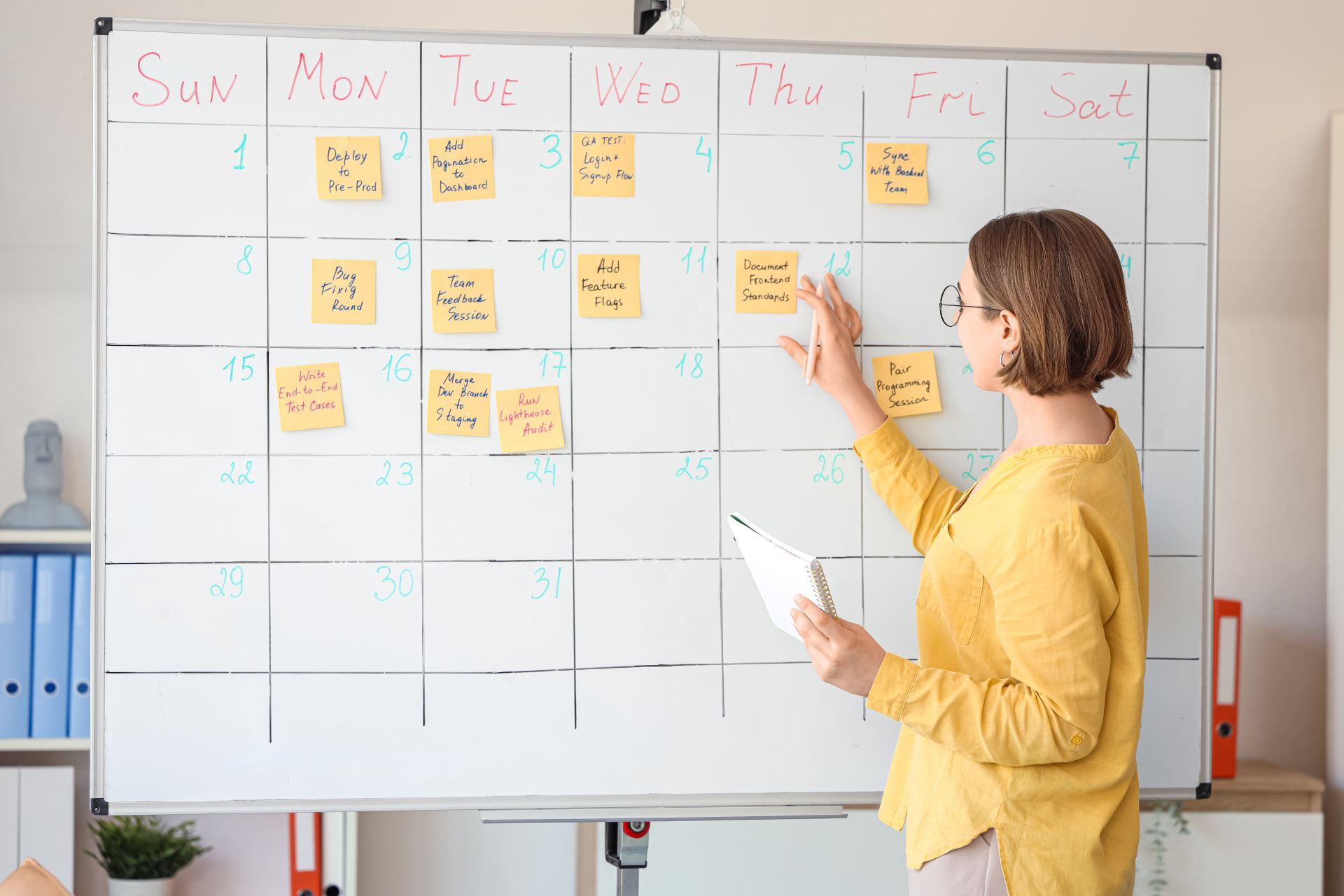
Large tasks can be intimidating. Just thinking about their size can make you feel overwhelmed and have thoughts of quitting. But you only think that way because of the size.
What would happen if you somehow found a way to make them smaller? That’s it! The trick is to divide them into manageable pieces that make them easier to approach and work on.
In my case, I was tasked with working on a big presentation that was too much to handle at once. So, I broke the entire project into subtasks, including research, outline, design, and practice delivery.
Focusing on a tiny aspect of the task blurred out the many other undone parts and allowed my brain to prioritize at the moment.
Sometimes, understanding how to prioritize tasks can only be achieved when you learn to approach your responsibilities “one step at a time.”
To put this into practice, please begin by identifying the main task you must complete now. Then, list all the more minor procedures needed to achieve it. This way, you can focus on one part without getting distracted by the bigger picture.
For example, if you need to organize your workspace before a new work-week begins, you can break it into clearing the desk, arranging supplies, and sorting your files.
The good thing about breaking down your tasks is that they make it so easy to prioritize them. You can handle the most critical or more time-sensitive steps first, allowing you to make some progress even when you cannot finish the entire task immediately.
Plus, completing each step makes you feel and brings you closer to your goal, motivating you to see it through to the end. You can cut out all unnecessary mental stress, gain clarity, and boost your productivity by a mile by breaking your tasks into smaller subtasks. Try it and find out for yourself.
3. Set Clear Deadlines
When it comes to learning how to prioritize tasks, deadlines are a necessity. They provide some structure to your workflow and ensure that you remain focused on what needs to be done at the moment. Without them, it can be easy to lose track of time or burn too much time on activities of less value.
In my final year of high school, I faced a mountain of tasks and mini-projects, all of which were to be completed within weeks of each other. Like every normal human being, I felt overwhelmed by the thought of all the workload I had to deal with. I set realistic deadlines for each of them and focused on completing them one at a time.
But in your case, it might not be a bulk of assignments but office work. What you need to do is evaluate each time and assign a time frame that you think can be completed.
If it’s something you’ve done before, you look back at how long it used to take to complete it and work with a similar time frame. But this should be after you have broken it down.
For instance, if you have a report due by the end of the week, you can set a deadline and time frame for research on Monday, a similar structure for your first draft on Wednesday, and proofreading by Friday.
See? Just doing this has made accepting the thought of getting to work easier. This structure will help you stay organized and avoid any last-minute panic.
Learning how to prioritize tasks becomes much easier with deadlines. As you rank your tasks based on their urgency, you can streamline your focus on what needs your immediate attention while keeping track of your long-term goals.
Additionally, meeting deadlines has its own way of making you feel super fly, confident, and productive. With such clear deadlines, you’ll find managing your time and daily demands easier.
4. Identify Urgent Tasks

Anyone who has mastered the art of prioritization would tell you that the creme de la creme of the skill has a good eye for spotting your most urgent tasks and hammering down on them.
Urgent tasks, as the name suggests, require immediate attention, and most times, they have a looming deadline attached to them or have a significant impact on your life if left unattended. Recognizing these tasks is the key to avoiding any last-minute scramble and reducing unnecessary exhaustion.
My experience a few years ago is an excellent example of how to prioritize tasks in life. I had a habit of focusing on tasks I enjoyed and ignoring the ones that were more urgent and important. This habit resulted in several missed deadlines and unnecessary anxiety.
I adopted a simple method to address this. I’d review my tasks at the beginning of the day and mark the ones with looming deadlines or immediate consequences.
This helped me tackle urgent matters first, ensuring that nothing of importance fell through the cracks. The trick to identifying your most urgent tasks is asking yourself, “What needs to be done now, and what can wait?” This question opens your eyes and helps you gain clarity on where you should focus your energy at the moment.
When you master the skill of spotting your most urgent tasks, working on them becomes more efficient, and you feel more in control and productive.
5. Use The Eisenhower Matrix
The Eisenhower Matrix is a framework that divides tasks into four categories: urgent and important, important but not urgent, urgent but not important, and neither urgent nor important. This framework helps you decide what needs your immediate attention and what can be scheduled, delegated, or removed altogether.
I learned how to prioritize tasks by using the framework during a chaotic phase where I had to manage commitments to work and academics while grieving the loss of a dear friend. My to-do list was a mess, and it was a considerable struggle to channel my focus on what needed to be done. A mentor suggested it, and using it changed things for me.
All I had to do was write down my tasks and sort them into four quadrants. Tasks that were urgent and important, like preparing for my exams and meeting deadlines, were my immediate focus. Others that were important but not so urgent were scheduled for later.
The urgent but less important ones were assigned to my assistant, and I deleted the time-wasting activities. From using this matrix, I learned the difference between being productive and busy, gained a lot of clarity, and greatly reduced the amount of stress I had to deal with.
If you share a similar struggle of failing to prioritize, the Eisenhower Matrix may be the game-changer you need. It won’t just help you focus on what truly matters, but it will also allow you to become more efficient and purposeful in daily life.
6. Focus On High-Impact Tasks

Another way you can master how to prioritize tasks is to spend your most productive energy on activities that yield the most significant results.
Such activities are called “High-Impact” tasks, and are this way because they align well with your goals and have a heavy effect on your personal growth, career, or other aspects of your life of significant importance.
Learning to prioritize such tasks is critical to making the most of your available time and avoiding getting stuck in busy but unproductive work.
One reason high-impact tasks are important is that they require a significant dose of effort and concentration to accomplish. But the rewards and benefits of completing them are always worth the effort.
You can spot them by asking, “Which task before me brings me a step closer to my goals?” or asking, “What will have the biggest impact if I get it done today?” Asking yourself these questions keeps you focused on what matters most: results.
Remember, not every task on your list deserves equal attention. By narrowing your attention to high-impact activities, you can achieve meaningful results, avoid stress, and enjoy a greater sense of accomplishment every day!
7. Delegate When Possible
Remember our prior conversation on the Eisenhower Matrix? One of the things I mentioned there was that there are tasks that are urgent but not important.
The question is, what do you do with such tasks? Here’s the answer that works: you delegate them. Delegation is a great way to reduce your workload so you can concentrate on only important stuff.
This doesn’t mean that you are avoiding responsibility; instead, you are putting your skills and time to more efficient use.
By recognizing that you are surrounded by other people you can trust to handle specific tasks just as well as you can, you can empower your team or colleague, allowing you to build more cooperation and trust between you and them.
Delegation also helps you manage essential tasks that may not necessarily require your expertise. By delegating as much as possible, you can ensure that your energy is spent on the most significant tasks that help you grow and succeed without getting bogged down on less important work.
8. Eliminate Distractions

Avoiding your distractions or limiting them altogether is a very crucial step in learning how to prioritize tasks efficiently. Since our world is swallowed up by emails, notifications, and many other interruptions, it gets easy to lose your focus on what matters.
The first time I worked on multiple projects that required me to be online for more extended periods, I found myself constantly being distracted by social media notifications and random emails, all of which made it extremely challenging to stay focused and get things done.
As expected, my productivity levels hit because I lost track of my priorities. I dealt with this problem by setting specific times for checking emails and social media, and during work hours, I muted my notifications or placed my devices on DND.
By creating an environment that allowed me to stay less distracted and more dedicated, focusing fully on the tasks at hand was easier. The results were impressive as I finished tasks of higher quality with more speed, and efficiency.
Sometimes, learning how to deal with distractions means creating a physical space to work. Whether it’s decluttering your desk, using noise-canceling headphones, or just setting boundaries with others, you can concentrate better and achieve more in less time.
Personally, I have found that working in a quiet, organized space works perfectly and helps me stay on track. When you eliminate possible distractions, you not only prioritize tasks better but also take more control of your time. This way, you can make more progress and be more efficient in achieving your goals.
9. Review And Adjust Priorities Daily
At the beginning of my career, working with a list of tasks for the week and sticking to it was a routine and a practice I followed religiously. But as time went by, there were several times when things didn’t go as planned. New urgent tasks with tight deadlines would pop up, or some of my tasks would take longer to complete than I had predicted.
The side effect of this was that I felt more frustrated and overwhelmed with each passing day. That was when I realized the value of reviewing and adjusting my priorities with the arrival of every new day.
By taking a few minutes every morning to review what needs to be accomplished, it is easy for me to spot a shift in any priority. If a task became more urgent, I moved it up my list and focused on it first.
In the same light, less important tasks took a back seat at the end of the list, or I’d just delegate or remove them altogether. Such daily check-ins helped me stay flexible and focused on what really mattered. My experiences have taught me that not every task is equal, and some require more attention than others.
As I review and adjust my priorities daily, I ensure that I am always spending my energy, time, and focus and not wasting my time on things that no longer align with my goals. This simple practice has helped me stay more in control, deal with less stress, and accomplish more in less time.
10. Focus On One Task At A Time

A mistake I made as a younger person was multitasking—trying to work on several things all at once, thinking that it could help me save time.
I soon realized that trying to weave my way through multiple tasks at once only resulted in less mistakes, missed deadlines, and confusion. It became clear to me that attempting to spread myself was ineffective, slowing me down and reducing the quality of my output.
I saw a significant improvement in quality of work and speed when I decided to stop multitasking and face my responsibilities one task at a time. By focusing on one task, I could finish faster, and whatever I worked on always came out better than expected.
This new approach also helped me build and maintain better mental clarity. I didn’t have to switch gears or recall what I was doing before when I focus on one task. Plus, the sense of accomplishment after completing every task was thrilling and satisfying enough to keep me going.
My experiences made me realize that multitasking was the major cause of burnout and inefficiency. Focusing on one task at a time allowed me to get more productive, reduce stress and stay more organized. The shift in mindedness was exactly what I needed to prioritize more efficiently and accomplish more.
How Do You Prioritize Tasks Effectively?
One way to answer the question, “How Do You Prioritize Tasks Effectively?” is to consider using lists. One way you can learn how to prioritize tasks is to list everything you need to do while ensuring that no task is overlooked or neglected.
Once you have a clear overview of what needs to be done, your next assignment would be to rank your tasks based on their immediate importance and urgency. Working with frameworks like the Eisenhower Matrix can help you decide on which task to focus on, delegate, or schedule for later.
With your list, you can further streamline current functions into a chain of smaller, actionable tasks to make them less overwhelming before execution. This way, you can execute faster and with less hesitation.
How Do You Prioritize Tasks Based On Importance And Urgency?
An important question is, “How Do You Prioritize Tasks Based on Importance and Urgency?”
Learning how to prioritize tasks based on importance and urgency requires some degree of clarity over your goals and deadlines. Once you have that clarity, classify your tasks and focus on urgent and important ones.
Important tasks with less urgency can be handled later as they contribute to long-term success. You can delegate urgent but less important tasks to others and create more free time to focus on high-priority tasks. Tasks that are neither urgent nor important should be minimized or removed to avoid wasting time on trivial matters.
Conclusion
Learning how to prioritize tasks is a skill that can completely change the way you approach work-life balance and achieve more focus on what truly matters. It’s about being intentional about your choices, ensuring they align with your goals, and allowing you to use your best time.
Although it can get overwhelming initially, reminding yourself that prioritization is a habit that improves with time can be an excellent way to stay on track.
Remember to keep small, stay consistent, and adjust your strategy when needed. As you master this skill, you’ll enjoy more clarity, reduce your exposure to stress, and achieve more in less time. Keep striving for more efficiency; your efforts to prioritize effectively will help you live a more productive and fulfilling life.
Save this for later!
