

Budgeting is one of the simplest ways to mastering your finances. If you cannot control and keep track of the money that goes in and out of your pocket, you will be far from achieving that goal.
Budgeting is a big deal if you want to succeed financially, which is why big corporations, businesses, churches, and even countries draw up a budget and work with it.
In budgeting, you get to plan how to use and control the resources you have at your disposal in running a home or running a business. It will help in making sure that you do not spend your income on frivolous things. In this article, you will get a step-by-step guide on how to budget.
What Is A Budget?

A budget is a proposed summary of the income and expenditure over a specific period in the future. People who create budgets usually re-evaluate them periodically to reflect the reality of the actual situation.
People use budgets to set financial goals – families, churches, hospitals, schools, banks, business corporations, and even NGOs.
Many people see budgeting as something only misers do, but that is a flawed perspective. Budgeting helps you monitor what you spend and how you spend it; it is the first step to gaining control over your income.
Types Of Budget
Economists classify budgets under many categories. The type of budget depends on either duration, performance, or approach.
1. Based On Performance
The most common is budget type according to previous performance. In this category, we have the deficit, balanced, and surplus budgets.
- Deficit Budget
You have a deficit budget when your actual expenses exceed your income. Governments and organizations sometimes have this kind of budget. While they do, they also have various means of recouping their losses. But as an individual or a family, running on a deficit budget is not ideal as it is a precursor to debt accumulation.
- Balanced Budget
Your budget is balanced when your expenses in the period in question were equal to your income. This category is a safer place to operate. It is the first step in becoming financially stable.
- Surplus Budget
Economists laud this as the budget to have. A budget is a surplus budget when the expenses for the estimated period are less than the income. The extra cash that is remaining from this budget can go into savings or other profitable investments.
2. Based On Duration
We can also categorize budgets based on duration. The budget you are drawing up can be a short-term budget or a long-term budget.
- A short-term budget is one that you expect to run for a short period.
- While a long-term budget is expected to run for a long time up to years.
3. Based On Approach

There is also categorization based on the approach of the budget. The two types of budgets in this category are the top-to-bottom approach and the bottom-to-top approach. Companies, businesses, corporations, and the government use this kind of categorization.
- Top To Bottom Approach
In this kind of budgeting, the top executives furnish their subordinate departments with the overall budget. The departments then create their budget based on the ones laid out by the management.
- Bottom To Top Approach
Here, the various departments and sub-departments create their budgets and then send them to the management. The management pulls the budget of every department together to create an all-encompassing organizational budget.
4. Based On Income Flow
This category is called relational budgets by economists. It is of two types: Static budgets and flexible budgets.
- Static Budgets
Static budgets are budgets with fixed amounts of figures. These figures do not change as long as the budget runs. This kind of budgeting is popular among people or organizations having a specific amount of money they earn in a month or year. They can allocate a fixed amount of money to each part of the budget.
- Flexible Budgets
This type is popular among people and organizations that do not have a specific amount of income they get in a period. A business that trades shares or cryptocurrency can earn $15,000 this month but get $10,000 in the next. Governments, artisans, service providers, and business owners receive their income like this.
This kind of budget does not have a specific amount in it; instead, it makes use of percentages. The planner can say, 20% of income this month will go to savings or charity.
20%, depending on the financial success of the week, month, or the year can be $5000 or $10000. Whatever is the equivalent of that 20% at the end of the week, month or year goes to savings or charity.
Importance Of Budgeting
Knowing how to budget is necessary for everyone old enough to think about money. There are many advantages to it so, whoever takes budgeting seriously will reap the benefits. Here are some of the importance of budgeting.
1. Budgeting Helps You Prioritize

Needs and wants never run out. As long as there is life, there is always something to do with money. Sadly, we do not have enough money to take care of all our needs all the time; this is where budgeting comes in. Since resources have limits, budgeting helps us focus on the more important aspects of our lives.
Priorities are different. If you are a homeowner, allocating money for rent will not be a priority for you but, it will be for someone else who has to pay rent or mortgage. So, when you make a budget, it helps you focus on the things that matter most to you.
2. Budgeting Reduces Wasteful Spending

It is always good to define what you want to use your money for. This is because when you do not state the purpose of a thing, abuse becomes inevitable. If there is no planning on how to use your money, you might end up squandering it. But when there is a budget, it gives direction, purpose and curbs the rate you spend recklessly.
3. Budgeting Creates Avenue For Returns And Proper Management
This is especially true for businesses. When you budget, your management and efficiency become better. It also sheds light on opportunities for development. It also gives you the best possible returns as nothing goes to waste.
Purpose Of Budgeting
Before moving on to how to budget, the purpose of budgeting should be stated. Mainly, the purposes of budgeting are for:
- The allocation of income.
- Planning and control of finances.
- The motivation to do better.
- For easy analysis of finances and financial predictions. A business analyst can also look at the budget of a business for some years and predict how it will do in years to come.
- Budgeting helps you save money.
- Budgeting leaves you stress-free. You are not bothered if you see anything you don’t have which is not covered by your budget.
How To Make A Monthly Budget

A monthly budget is a brief that summarizes the income and expenditure for a month. It is tangible evidence of the financial goal for the month. Experts believe that budgets should be simple as a complex budget will only confuse you.
Preparing a monthly budget is a skill you need to learn as a homemaker and a businessperson. One rule you need to consider is the 50-30-20 rule.
This rule states that: you should allocate 50% of the money you bring in monthly to the running of the business or home.
For the home, the 50% must cover vital expenses like housing (this should not take over 30% of your monthly income), food, utilities, clothing (if necessary), out-of-the-house fees, phone, and TV subscriptions.
For businesses and organizations, this 50% must cover the cost of running the business for a month and this includes rent, power, staff salaries, and repairs in the office.
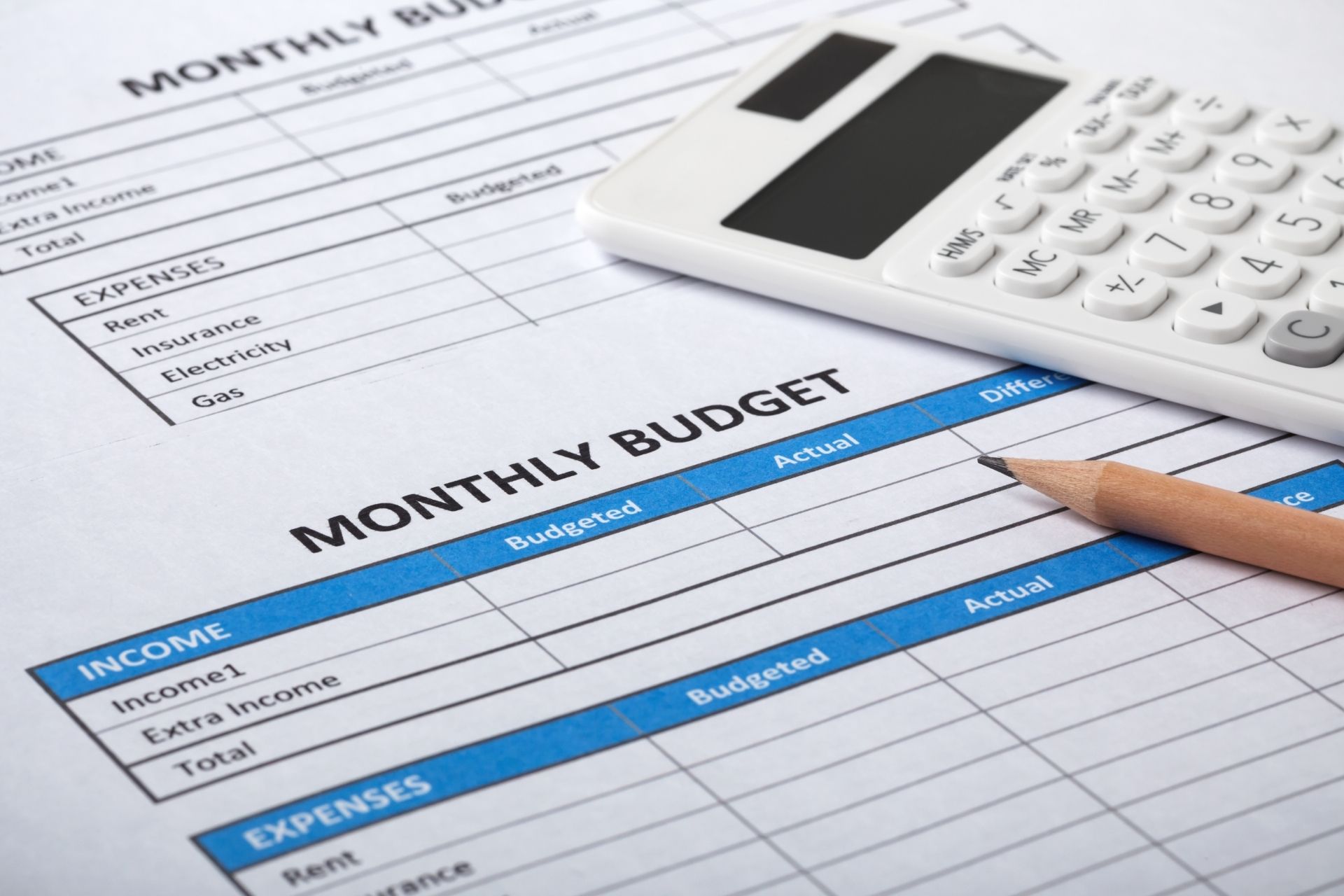
After spending 50% on recurring monthly expenses, then 30% can be spent on the not-so-important expenses. For the home, it is from this part of your income that you can finance the family or personal vanity.
For businesses and organizations, this should be the monthly profit. The management can channel this towards expansion, development of staff and the organization, and investments.
The last 20%, whether you are running a home or an organization should go to savings. No one knows when unplanned expenses will come. And it is best to prepare for it.
Save this 20% for emergencies. Do not make any budget without including the amount or percentage of your income that should go to savings.
Budgeting On A Low Income
The first reason we budget is that resources are limited while the things we need these resources for are unlimited.
Having a low income every month is indeed one of the most compelling reasons to budget. For low-income earners, prioritizing what you spend money on is paramount.
Consider your rent first. Secure where you live. Following it is your feeding and utilities, then your savings. You can spend the rest on the less important things. Remember, the lower you earn, the more you need to prioritize.
9 Steps Of The Budgeting Process
In this section, see how to budget step after step.
1. Carve Out Ample Time to Start

To create a budget, you have to carve out ample time in a day. It is not advisable to do your budgeting bit by bit as this might confuse and frustrate you.
Take a good look at your schedule and pick out a day that will be suitable for you to draw up a budget. Take the time to look through your finances, accounts, and books to ensure that you make the correct estimates. This is the first thing you need to do.
2. Know Your Income

So, have you made the time yet? Good. After creating time for this activity, the next thing to do is to know your money.
This second step is important for business owners and organizations. Why? Because they do not have a fixed amount of money that comes in per month or year. What do you do in such a case?
When you are trying to budget for the year, find the average of your income in the last five years. The average income should work and give you insight into what you need to do. If you are budgeting for a month, take the average income for the past six months.
It includes every money you earn in whatever means; salaries, royalties, return on investments, and gains from doing business. Get these numbers and set them aside as they are what will guide you in making your budget.
3. Outline Expenses (Recurring First)

The next step is knowing your expenses. The very first expenses that you should be very particular about are the recurring ones. These come monthly, and they are almost mandatory that you must address them.
Some of these expenses are house rent, foodstuff and groceries, utility bills like water light, gas, heater, clothing, school fees, and transport bills.
You can also add medical bills here because they are necessary expenditures. For a business, the recurring expenses are rent, power, staff salaries, data, and maintenance of the organization’s machines.
The second set of expenses is the subscriptions that you have on all platforms; cable subscription, TV subscription, Netflix, iTunes, apple music. It will surprise you how much you spend when you add these up.
The third set is the less important ones like money spent on eat-outs, parties, vacations, and buying glory items. Write down these expenses; this way, it is tangible to you.
4. Estimated Allocation Of Money

At this point, you have finished listing all the amount of money you get every month or every year and outlined all the expenses. You have done the majority of what you need to do on how to budget.
The next thing to do is allocate the amount you intend to spend for the next month or year.
You can look at your expected income and decide to spend less or more, depending on your choice. This is where you have to employ the budgeting strategy stated earlier: the 50-30-20 rule.
After paying your tax, you put away your savings – which is 20%; 30% can go to financing your frivolities, then 50% will go to the necessities of living like the payment of house rent, fees, utility bills, and the rest.
Tailor your budget to be as simple as possible. And not just that, draw up your budget in a way that is peculiar to the reality of your home or organization.
5. Follow Your Money

Congratulations on coming this far. Now that you have set the ball rolling by drawing up the budget, you can now monitor your cash. It is often at this point many people miss it. After drawing the budget, stick to it.
By following what you spend, you will know if you are sticking to your budget or not.
One way to do this is by writing it down. A friend of mine carries around a mini jotter. On the jotter, he writes down all he spends daily. It gives him a picture of how he is doing at the end of the month.
If you hate extra weights like me, no matter how small, you can use your phone instead. There is the notebook feature on most smartphones.
You can note down any cash you spend daily and even date them. Alternatively, you can use the excel sheet on your phone to put this down.
For organizations, this is where the financial secretary comes in handy. They have the responsibility of tracking the money in the organization. At the end of the month, you can see how much you have spent at a glance.
6. Review Your Expenses

At the end of the month or year, you can bring out the notebook, paper, sheet or open the application you used to write down your expenses. In the case of organizations and corporations, you can instruct the financial secretary to bring the books.
Compare your actual expenses with what you have budgeted earlier and check how well you did in the month.
After this review, you would find out if you had a deficit budget, balanced budget, or a surplus budget.
There is this realization that tracking your expenses brings. You get to see how much you have spent on each category of your budget. You learn your spending habits and see where you need to adjust.
7. Trim Your Expenses

You must have seen your expenses for the month. How do you feel about it? Were you alarmed at the money you spent impulsively? Did it surprise you that you spent a lot of money in restaurants? Did you order too much pizza? Often, the amount of money we spend snacking or shopping without a plan can cut deep into our pockets.
So, if this is the case for you, you can choose the parts of your expenses to cut out. One thing writing all these down and seeing the figures does is help to ease decision making.
For instance, you discovered that ice cream, parfait and pizza took a sizeable chunk of your income, you can choose to reduce the amount you spend on sugars and processed foods.
When you become tempted to buy them, you remember how much you spent on them last month; you stay away. That is the psychology of money and spending. Always write out the numbers.
8. Re-allocate Money For The New Month

After looking at the amount you spent in the previous month or year, you might have made new financial decisions based on the outcome of the budget (deficit, balanced or surplus). It could be to re-allocate money for the coming period.
This allocation is easier for corporations, governments, and parastatals because they have many people working hand in hand to ensure that operations work with the budget.
But for someone handling their personal finance, you may have to be more careful. These days, some apps can help you save money; you can connect some of them to your bank account.
You can set them to lock away a certain amount of money daily, weekly, or monthly. It can also be programmed to take a particular percentage of any money that comes into your account. It will help make sure you do not tamper with money meant for important things.
9. Spend With Your Budget In Mind

Now that you have re-allocated money for the next month or year, you can spend. Whenever you spend, always remember to follow your money. Do not underestimate the importance of writing down everything you spend.
Conclusion
Anyone who is old enough to handle or think about money should learn how to budget. It is imperative to take cognizance of changes. When circumstances and priorities change, ensure that these reflect in the budget that you drew.
You can re-evaluate your budget and see what to add or remove. Also, do not just treat budgeting as a one-off task. It is something that you have to keep doing until you have internalized it. This mastery is your ticket to controlling your finances.
Save this for later!

INSTAGRAM || FACEBOOK || TWITTER || PINTEREST || YOUTUBE || LINKEDIN